
Miami-Dade Resident Lookup Sources
No official master roll names all county residents. A useful resident lookup combines independent sources and preserves each limit. Start with the record most closely tied to the fact already known.
| Record | What it can confirm | Official keeper | Access and limit |
|---|---|---|---|
| Property roll | Owner, situs, tax-mail destination | Miami-Dade Property Appraiser | Free; ownership is not occupancy |
| Recorded documents | Named parties and ownership chain | County Recorder | Web mostly 1974 forward; older library records |
| Voter data | Registration address, status, party, participation | Elections and Florida DOS | Exempt people omitted; not all residents |
| Court index | Parties, cases, events, name variants | Miami-Dade Clerk | Protected cases excluded; verify disposition |
| Vital and probate files | Life events and estate trail | Florida Health and Clerk | Eligibility, confidentiality, and fees vary |
| Business and licenses | Filing role or professional credential | Sunbiz, DBPR, Health boards | Business address may not be a home |
A record that confirms a name is only a starting point. Match an address, date, co-party, folio, or middle name before treating it as the right person.
Avoid Miami-Dade Same-Name Errors
Miami-Dade's multilingual name patterns make a one-spelling search especially weak. Compound Hispanic surnames may be indexed under either the paternal or maternal part. Hyphens, accents, initials, married names, and Anglicized given names can also shift between systems. Trusts and companies can replace a person's name on a property roll.
Build a short variant list before searching. Test each surname part, with and without punctuation or accents. Compare middle initials, co-owners, dates, folios, and consistent addresses. A date of birth may distinguish voter records where lawful, but it should be handled with care and never published merely because it is accessible.
Same-name test. Require two independent matching details before joining records to one Miami-Dade County resident.
Confirm a Miami-Dade Resident
This resident lookup sequence anchors a name to a parcel and then tests the identity across separate indexes. It works best for an owner and should not be used to infer every person inside a home.
- Search the Property Appraiser by owner name. Compare the parcel's situs, meaning its physical location, with the tax mailing address and retain the folio.
- Carry the full name, co-owner, folio, and legal description into Official Records. Check a recent deed or mortgage for the same party and parcel.
- Search the appropriate Clerk court system using the name and variants. Read party role and case events before drawing a conclusion.
- Use voter, business, license, vital, or probate records only as independent checks suited to the question.
- Order a certified copy from the custodian when the result must carry official proof.
If the goal shifts to every address on one road, the Miami-Dade street directory owns that broader address workflow.
- Docket
- The dated list of filings and events in a court case.
- Index versus image
- An index points to a record and summarizes fields; an image reproduces the filed document.
- Certified copy
- A custodian-issued copy formally attested as a true copy of its record.
Miami-Dade Court Name Search
The Clerk runs separate systems. The Civil, Family and Probate Online System covers those case groups, while CJIS covers felony and misdemeanor cases. Both direct users to choose a search method, enter required fields, and open a result card. Registration can remove CAPTCHA and search limits and expand permitted access, but it does not override sealed or confidential records.
| Search control | Use | Important note |
|---|---|---|
| Party or defendant name | Core name route | Try supported name variants |
| Case number | Direct case route | Best when already known |
| Attorney bar code | Advanced OCS field | Registered mode |
| Judicial section | Narrows OCS records | Advanced selector |
| Dockets and image icon | Opens event and copy route | Availability follows access rules |
A result may show case number, parties, case type or division, judicial section, attorney information, and available docket documents. Juvenile, adoption, sealed, expunged, and confidential family or probate material can be hidden. No web result never proves that no file exists.
Check Miami-Dade Public Affiliations
Business and professional records can corroborate a name without proving residence. Florida's Sunbiz search covers corporation, officer, registered-agent, and address filings. DBPR covers many regulated occupations and firms; the Department of Health provides practitioner profiles. Miami-Dade's local Business Tracker adds local business tax receipt data.
Use the Miami-Dade Business Tracker source to inspect the local search route.
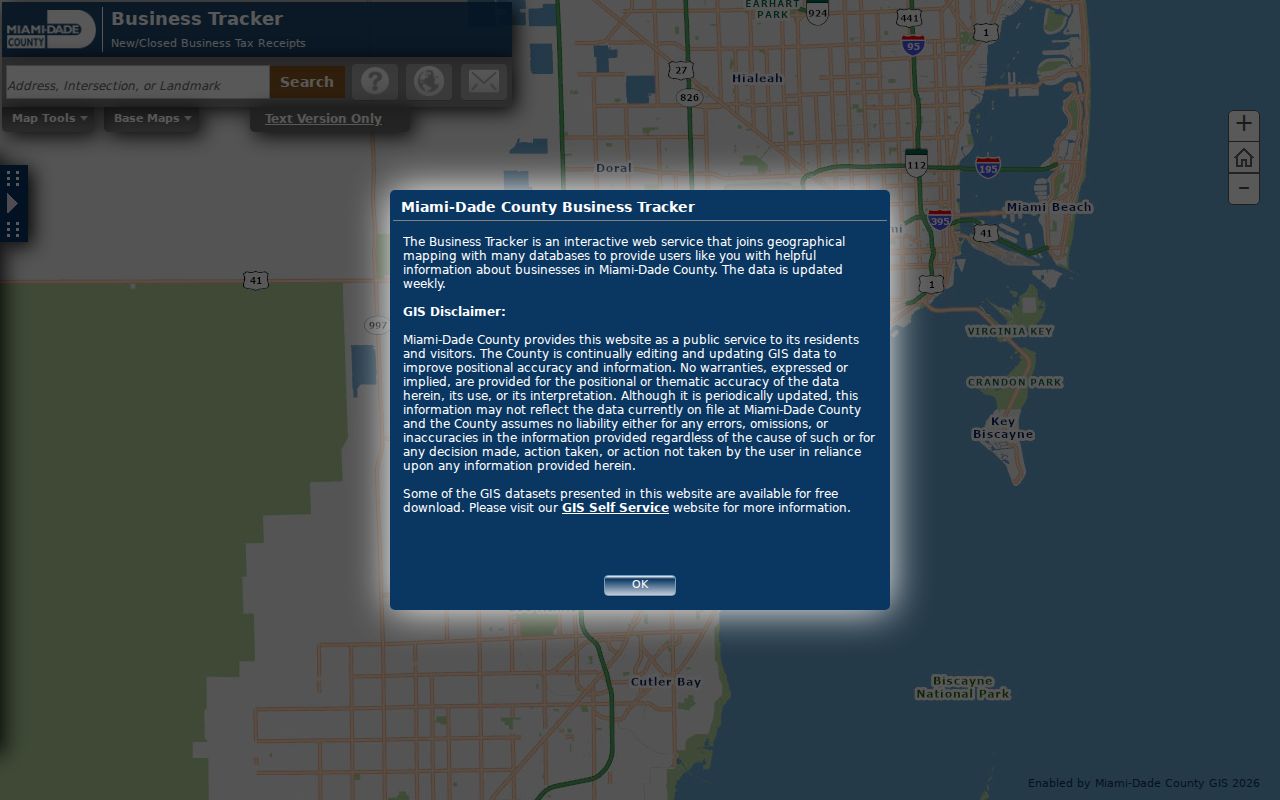
A principal, officer, agent, or license holder may use an office, firm, or filing-service address. Label the result as an affiliation unless another official record supports a home address.
Florida's DBPR license lookup is another independent name source.
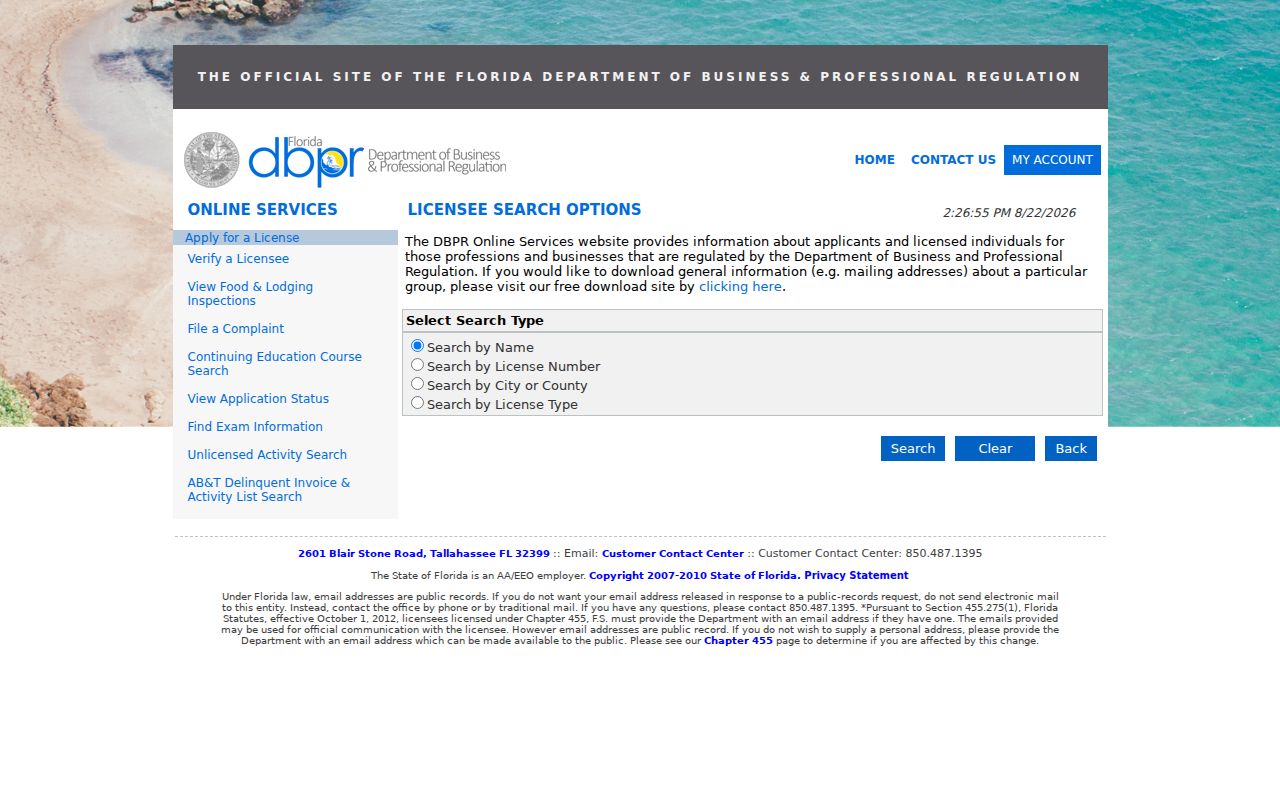
The license result should be read for credential status and named affiliation, not treated as a resident roster.
Miami-Dade Life-Event Trails
Florida birth records less than 125 years old are confidential. Death certificates without cause are available to any adult, while cause of death is confidential for 50 years and Social Security numbers stay protected. Marriage and dissolution certificates are public. State files for those two record groups begin June 6, 1927; earlier Miami-Dade records and actual licenses or divorce judgments lead back to the Clerk.
A state dissolution certificate is an abstract, not the full judgment. Probate dockets, recorded estate documents, death records, and an obituary can help identify a personal representative or possible heir. For a birth parent, use Florida's official confidential adoption and reunion process rather than trying to bypass sealed records. Former classmates are better approached through yearbooks, historical directories, and the MDPLS obituary workflow.
Miami-Dade Obituary Name Clues
The MDPLS obituary index contains more than 915,000 citations dated from 1896 through 2008. It does not reproduce the obituary. It points to a newspaper and publication date, which the reader must retrieve through library NewsBank access or Main Library microfilm.
This two-stage search can distinguish same-name residents through relatives, age, place, or service details. Verify the facts against death, probate, cemetery, or other original records. A newspaper notice is valuable evidence but can contain family-supplied errors.
Separate Safety Records From Lookup
The FDLE registry supports name searching and an address, city, ZIP code, and radius mode. It reports designation, identity, address or status, and offense information, while warning that reported data are not independently confirmed by FDLE. The tool is a focused public-safety source, not a general resident directory.
View the official FDLE search and confirm any correction with the agency.
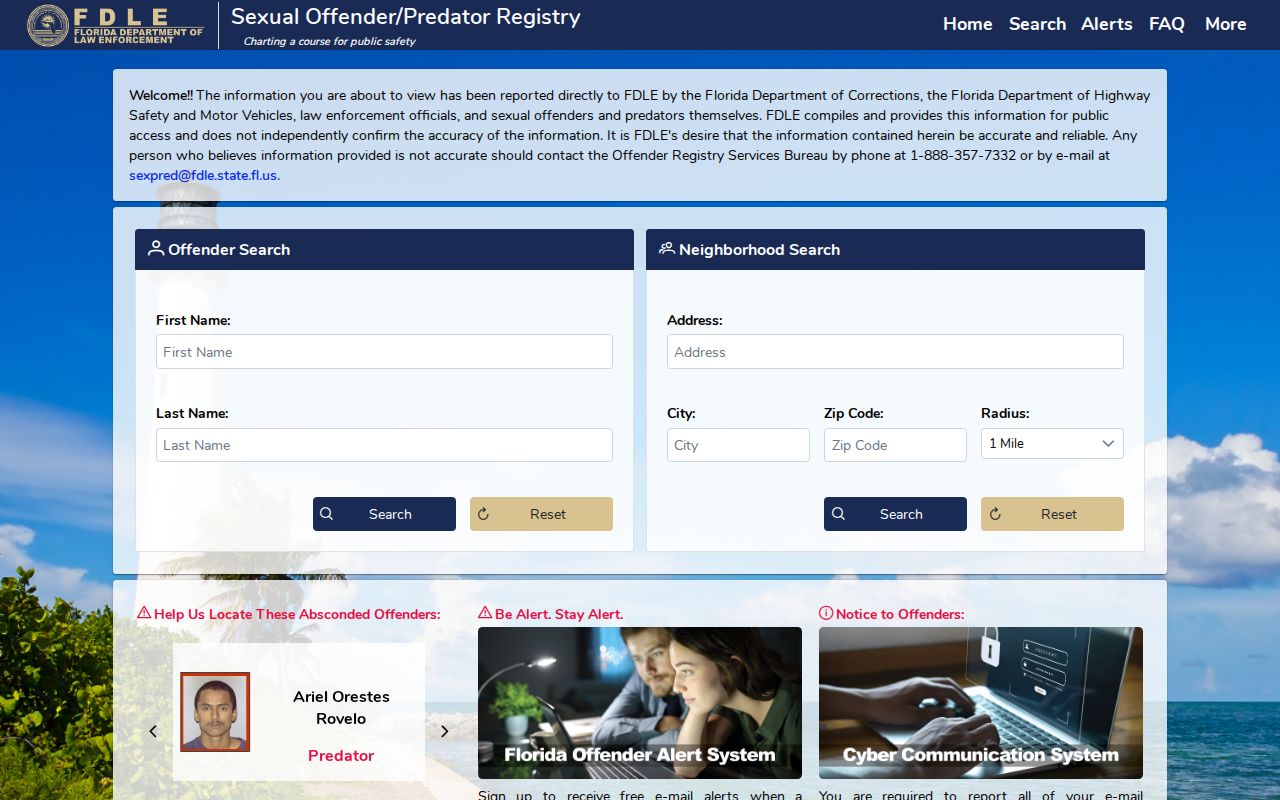
County inmate results are also only current-custody snapshots. Charges are not convictions. Check the court docket for disposition and keep records from different systems in their proper context.
Request Missing Miami-Dade Records
When an official trail ends online, direct a focused Chapter 119 request to the office that keeps the record. Florida law allows an oral request without a name or statement of purpose. Miami-Dade's GovQA portal supports submission and status tracking, and the phone fallback is 305-499-8729.
Name the record type, date span, spelling variants, address, and desired format. County policy lists $0.15 for a single-sided page, $0.20 for a double-sided page, and $1 per page for certified copies, with labor charged when research and processing exceed 20 minutes. No fixed completion deadline is promised because time depends on volume and complexity.
Miami-Dade Resident Lookup Limits
Florida's Address Confidentiality Program supplies substitute addresses to qualifying victims of domestic violence and stalking. Protected participants are omitted from public voter lists. Other Florida exemptions shield defined information for specified public workers and crime victims. A missing address can therefore reflect a legal protection, not a search failure.
The Florida Digital Bill of Rights gives qualifying consumer rights against covered large commercial controllers, including access, correction, deletion, portability, and certain opt-outs. It does not erase deeds, parcels, court files, or corporate filings held under public-record law. Correct an official error with the custodian that created the source.
Lawful use. Use a Miami-Dade County resident lookup for lawful personal research, never to stalk, harass, intimidate, or harm anyone.